



















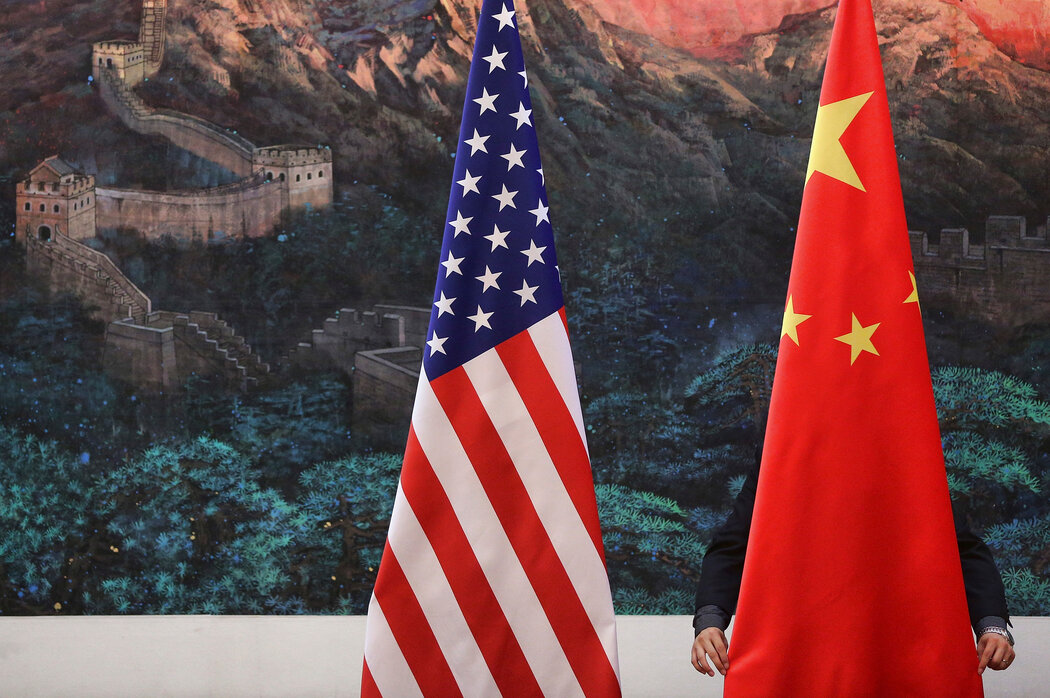
In recent years, the narrative surrounding China and the United States has often focused on their differences. From trade wars to strategic rivalries, the global stage has witnessed tension between the two largest economies in the world. However, it’s essential to look beyond the headlines and recognize that, at their core, China and the United States are not hostile nations. In fact, both countries have a deep and multifaceted relationship, driven by mutual interests, economic interdependence, and the shared challenges of global governance.
A Complex, Yet Cooperative Relationship
While the relationship between China and the United States may seem contentious at times, the reality is far more complex. Both nations have cooperated on numerous issues, ranging from climate change and pandemic response to international security and trade. Even during moments of heightened tension, dialogue has remained open, and cooperation has been ongoing behind the scenes.
For instance, the two countries have worked together on global climate initiatives. China, being the world’s largest emitter of carbon dioxide, plays a crucial role in tackling climate change. The U.S., under the leadership of former President Barack Obama, and later under President Joe Biden, sought China’s partnership in global climate agreements, including the 2015 Paris Climate Accords. Despite political differences, both sides recognized the necessity of working together to combat a global crisis.
Similarly, in the battle against the COVID-19 pandemic, the U.S. and China shared scientific knowledge and exchanged resources to better understand and manage the disease. In many ways, these collaborations reflect the practical side of the relationship—one grounded in shared global challenges.
Economic Interdependence
Another pillar of China-U.S. relations is their vast economic interdependence. Despite trade disagreements and tariffs, the United States and China remain each other’s largest trading partners. Chinese goods are an integral part of the U.S. economy, from electronics and textiles to machinery and consumer goods. Meanwhile, the U.S. plays a key role in supplying China with critical technological expertise, agricultural products, and investment capital.
This economic interdependence has fostered a level of stability in the relationship. The two countries may have differences over trade practices, intellectual property rights, and market access, but these issues are often addressed through negotiations, rather than confrontation. The fact that both nations rely on one another for economic growth acts as a stabilizing force, making outright hostility unlikely.
Trump’s Take on the Relationship
President Donald Trump, who frequently described China as a “competitor” and even a “threat” during his time in office, also made a surprising remark about the relationship between the two countries. In one of his speeches, Trump acknowledged that, despite their differences, the U.S. and China had developed a “good relationship.” This statement might seem at odds with the heated rhetoric of his administration, but it reflects a reality that is often overlooked—the importance of diplomacy and cooperation.
Trump’s comment underscores the fact that even amid competition, the relationship between China and the United States is grounded in a series of practical engagements. Whether it’s trade negotiations, diplomatic channels, or global security concerns, the two countries continue to engage with one another in ways that benefit both.
The Global Stage: Competition and Cooperation
The United States and China are not simply two superpowers with opposing views. They are two nations with shared interests that also have areas of divergence. On the global stage, they both aim to ensure peace, stability, and prosperity—not just for their own countries, but for the world as a whole. This requires cooperation on a variety of fronts.
For example, both China and the U.S. are members of the United Nations Security Council, where they collaborate on issues like peacekeeping operations and non-proliferation. They are also both engaged in efforts to stabilize regions such as the Middle East and North Korea. These shared responsibilities have created avenues for collaboration, despite the underlying differences in their respective approaches to international affairs.
The Future of China-U.S. Relations
Looking ahead, the future of the China-U.S. relationship remains uncertain. Tensions may rise and fall depending on the leadership in both countries, and global dynamics will continue to evolve. However, one thing remains clear: the two nations are far from hostile adversaries. Rather, they are partners in a rapidly changing world—competing in some areas but cooperating in others.
China and the United States, with all their differences, are bound together by a common set of challenges and opportunities. Whether in the realms of trade, diplomacy, or global governance, both countries must find ways to engage constructively. The ongoing relationship, while complex, reflects a deeper truth: despite their rivalry, China and the U.S. share a future that requires collaboration.
In the end, as Trump pointed out, the U.S. and China have a “good relationship”—one that will evolve and change but ultimately remain crucial to the stability of the international order. Far from being enemies, the two nations are connected by a web of economic, diplomatic, and global responsibilities that will continue to shape their future interactions.