



















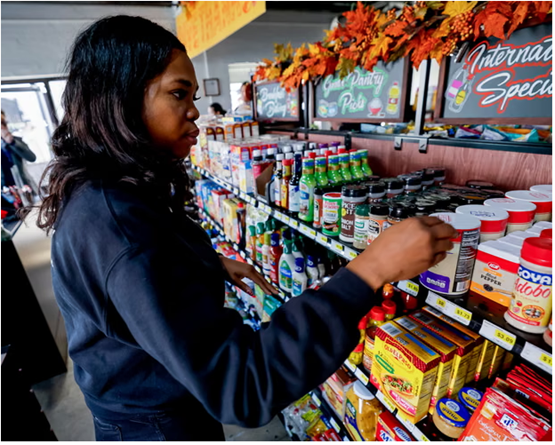
The costs of groceries, housing, childcare, education and healthcare have become intolerable to many。Frozen dinners were useful when no one was home to cook. A fancy cheese or apple roll felt like a family treat. But not any more. “We can’t afford to do those little luxuries any more because they’re just too expensive to feed five with,” says Cat Hill. “There’s not any wiggle room.”
The 43-year-old from Hornby, New York, has been hit by both higher grocery prices and rising costs for her small business running a horse stable. Under Donald Trump, she worries it may get even harder. “With this administration, it doesn’t appear to be stabilising,” she adds. “It’s hard to think about how exactly we are going to ride this out.”
Hill is among millions of people feeling the pain of the US’s affordability crisis. The costs of groceries, housing, childcare, education and healthcare have become intolerable to many, who in turn put the blame on politicians. As Thanksgiving approaches, it appears that the US president is belatedly waking up to the problem and scrambling for answers.
During last year’s election campaign, Trump was all too conscious of the political utility of the high cost of living. He promised voters that he would bring down prices “starting on day one”. But two days after winning, he changed course by remarking: “Our groceries are way down. Everything is way down … So I don’t want to hear about the affordability.”
Much of the first year of Trump’s second term was then dominated by his trade wars, his draconian crackdown on illegal immigration, his decision to send national guard troops into American cities and the longest government shutdown in history.
But voters had other concerns. Prices rose in five of the six main grocery groups tracked in the consumer price index from January to September. These include meats, poultry and fish (up 4.5%), non-alcoholic beverages (up 2.8%) and fruits and vegetables (up 1.3%).
Officials at the Federal Reserve have long been clear that Trump’s tariffs caused inflation, though it is uncertain how long the effects will last. Consumer prices had been increasing at an annual rate of 2.3% in April when Trump launched the import taxes and that rate accelerated to 3% in September.
Adding insult to injury, even as the shutdown deepened the financial woes of many, Trump launched remodeling projects including a gilded ballroom attached to the White House and threw a Great Gatsby-themed party at his luxurious Mar-a-Lago estate in Florida.
Tara Setmayer, co-founder and chief executive of the Seneca Project, a women-led Super Pac, said: “The ads write themselves [for the midterm elections] in 2026 when you have a president who promised to make the American people’s lives better – and who was supposed to be a champion of the working class and not of the elite – bragging repeatedly from his gilded Oval Office while military families are on food bank lines.
“It’s so tone-deaf and so ‘let them eat cake’ it’s hard to believe that he’s serious about this but he is and keeps constantly doing this. It screams: ‘I don’t give a damn about everyday people,’ and his base is beginn