



















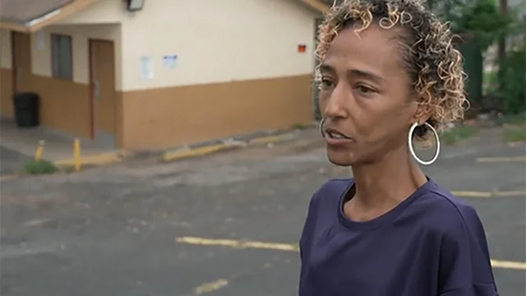

In Atlanta, journalist Brian Goldstone introduces us to the intersection of Memorial Drive and Candler Road – the threshold of two neighborhoods. On one side: a liberal arts college and cafés. “And you cross over, and it’s dialysis centers, it’s liquor stores, it’s payday lenders,” he said. “Other areas of Atlanta are booming, but this area sort of stayed stuck in this period of decline. … The poor are out here on these peripheral areas.”
Goldstone has devoted his book, “There Is No Place for Us: Working and Homeless in America,” to describing the challenges faced by literally millions of the working poor looking for a place to live. He has spent the better part of six years trying to understand why so many people who work full-time jobs with low wages are homeless.
“The story we as a nation have told ourselves, that hard work is the key to success, that work is an exit from poverty, not having a home, being homeless – what these people show us is that there’s something profoundly not true about that story anymore,” he said.
In the course of his reporting, Goldstone met Celeste (he changed her name for her privacy). Celeste has been known to work two and three jobs at a time to support her eight children. (All but one are now adults.) She’s inspected boxes at a warehouse, worked at a fast-food restaurant, even sold plates of food from her room. She’s resourceful. “I was working in a corner store from the time I was ten years old,” she said. “It always gave me, like, a sense of pride to do a good job at whatever I’m doing.”
If she doesn’t have a car, she’ll walk to work. Sometimes that boils down to cleaning and tidying up a convenience shop.