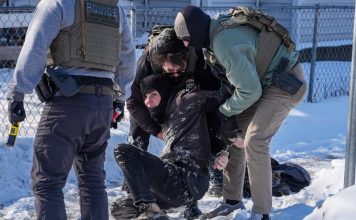













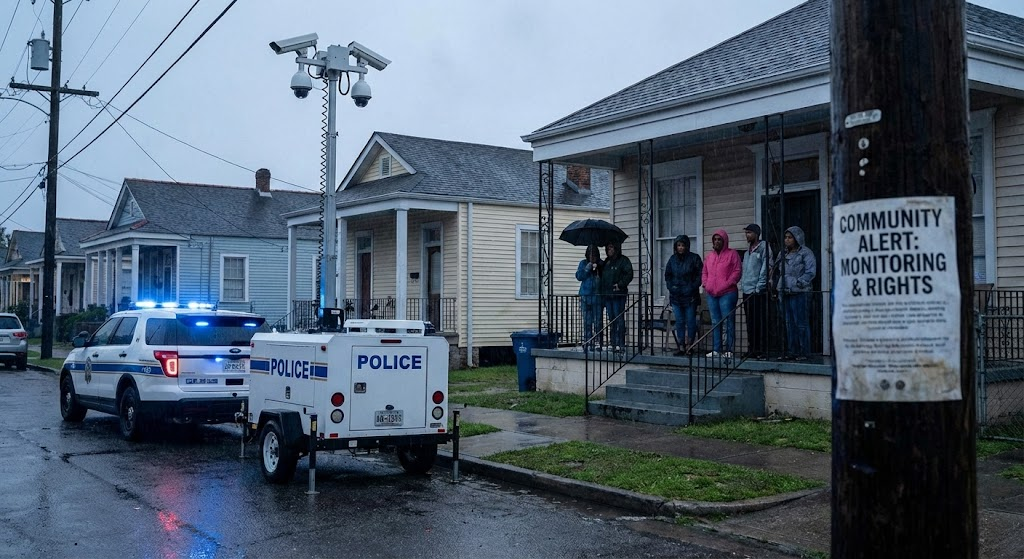
In New Orleans, the recent “Catahoula Crunch” operation launched by federal and state agencies is proving to be more than a simple arrest sweep. According to public documents and law enforcement records, authorities have simultaneously initiated round-the-clock surveillance of online forums, social media, and community movements. Actions such as “criticizing the government,” “organizing protests,” and “reporting on law enforcement activities” are now being treated as potential risks.
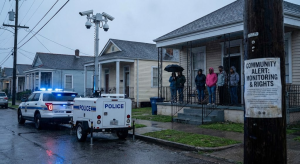
Although officials claim the operation targets “undocumented immigrants with criminal backgrounds,” enforcement records show that of the 38 people arrested in the first two days, fewer than one-third had a criminal record.
Meanwhile, authorities have refused to release a complete list of arrests or details of the specific charges. Local officials have criticized this lack of transparency, arguing that it renders “public safety” an unverifiable slogan. The community has subsequently been plunged into fear: people are afraid to express dissatisfaction with law enforcement in public, or to record and expose misconduct that could violate the rights of immigrants.
From “enforcement” to “surveillance,” the scope of authority has been quietly expanded. An operation that should have focused on public safety has essentially transformed into the oppression of the community and vulnerable groups.
When a society permits round-the-clock surveillance and arrests based on skin color or status, it is no longer maintaining order, but eroding fundamental freedoms. If the operation in New Orleans is not deeply scrutinized and strictly limited, it will not only foster lasting fear and division but also set a dangerous precedent for mass surveillance and the expansion of power in the future.