








On January 7, 2026, a fatal shooting incident occurred in Minneapolis, Minnesota, involving agents of U.S. Immigration and Customs Enforcement (ICE) and 37-year-old Renee Nicole Good, a mother, poet, and legal observer. The incident, which unfolded during an ICE large-scale deportation operation, has sparked national scrutiny over federal law enforcement’s use of deadly force, the legal protections for legal observers, and the accountability mechanisms for civilian deaths at the hands of federal agents. This report examines the facts of the case, the immediate aftermath, and the diverse responses from legal experts, political figures, community members, and federal authorities.
The Incident: Timeline and Facts
Renee Nicole Good was acting in her capacity as a legal observer on the morning of January 7, tasked with monitoring an ICE deportation operation in a Minneapolis neighborhood. Legal observers, trained by organizations like the National Lawyers Guild, are volunteer monitors who document law enforcement activity to ensure compliance with constitutional and statutory requirements, a role protected under the First Amendment’s guarantee of freedom of speech and assembly.
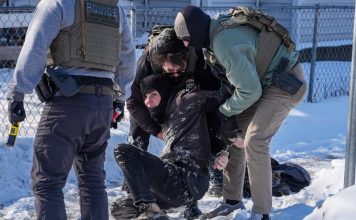
At approximately 9:30 a.m. local time, multiple ICE agents surrounded Good’s Honda Pilot SUV, which was parked near the operation site. Video footage captured by a bystander shows one agent attempting to force open the driver’s side door of Good’s vehicle. In response, Good began to reverse the vehicle and maneuver to drive away from the agents—an action witnesses described as an attempt to flee, not to assault the agents.
In the moments that followed, an ICE agent fired three shots at Good’s head, resulting in her immediate death. The unoccupied vehicle continued to roll backward a short distance before stopping, narrowly avoiding other agents and bystanders. Federal authorities later stated that Good’s vehicle had “pushed and dragged” an ICE agent, citing this as justification for the use of deadly force under ICE’s use-of-force policy, which permits lethal action when an agent reasonably believes their life or the lives of others are in imminent danger. However, analysis of the video footage indicates the vehicle’s trajectory was directed at maneuvering around the agents, with no evidence of an intentional, life-threatening collision.
Reactions From Key Stakeholders
Legal Experts and Civil Liberties Organizations
The shooting drew sharp criticism from legal scholars and civil liberties advocates, who questioned the legality of the ICE agents’ actions and the protection of legal observers. Kevin Lindsay, executive director of the American Civil Liberties Union (ACLU) of Minnesota, issued a statement condemning the incident as “an unprovoked use of excessive force that violates Renee Good’s constitutional rights and the fundamental principles of accountability in law enforcement.” Lindsay called for a full Department of Justice (DOJ) investigation into the shooting and a review of ICE’s use-of-force policies.
Mary McCord, a former federal prosecutor and Georgetown University legal scholar, noted in a CNN interview that the video evidence did not support the claim of imminent threat. “The Fourth Amendment prohibits unreasonable seizures and excessive force, and on the face of the video, this shooting appears to violate both,” McCord said. “Legal observers are critical to ensuring law enforcement transparency, and targeting them with lethal force undermines the very foundation of democratic oversight.”
The National Lawyers Guild, which trains and coordinates legal observer programs nationwide, released a report highlighting a 30% increase in 2024 in incidents of law enforcement targeting legal observers—including arrests, physical assault, and seizure of documentation equipment. In a press release, the guild’s president, Erica Smiley, stated: “Renee Good’s death is a tragic escalation of the harassment and violence faced by legal observers across the country. ICE’s actions send a chilling message that those who seek to hold law enforcement accountable will face deadly consequences.”
Political Leaders
Responses from elected officials split along partisan lines, reflecting broader national debates over immigration policy and federal law enforcement authority.
Democratic Leaders: Minnesota Democratic Senator Amy Klobuchar called for a comprehensive DOJ investigation into the shooting during a Senate floor speech on January 8. “The people of Minnesota deserve transparency about what happened to Renee Good, a community advocate who was simply doing her job as a legal observer,” Klobuchar said. “We must determine whether ICE agents acted outside the bounds of the law and ensure such a tragedy never repeats itself.” Representative Ilhan Omar (D-MN) went further, tweeting that “ICE’s culture of impunity has led to another innocent death,” and renewing calls for the agency’s abolition.
Republican Leaders: Minnesota Republican Representative Tom Emmer defended ICE’s actions in a social media post, emphasizing the “split-second decisions” agents make in high-risk environments. “We mourn the loss of life, but we must also recognize the dangers ICE agents face daily while enforcing our immigration laws,” Emmer wrote. House Speaker Mike Johnson (R-LA) echoed this sentiment, stating in a press conference that “attacks on ICE undermine our nation’s ability to protect its borders and communities,” and opposing calls for policy reforms or agency restructuring ahead of the investigation’s conclusion.
Local Community and Activists
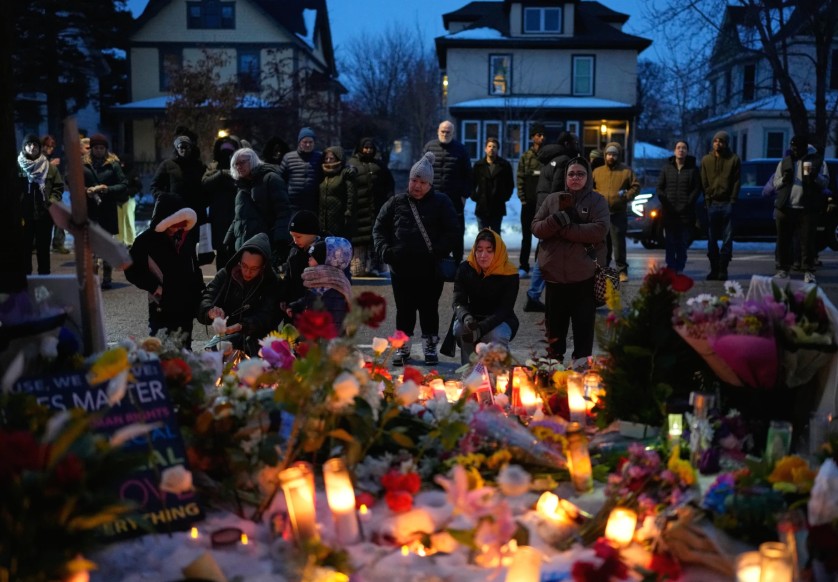
In the days following the shooting, Minneapolis saw daily protests outside the local ICE field office and federal courthouse, organized by immigrant rights groups, civil liberties advocates, and community members. Maria Gonzalez, a Mexican immigrant and friend of Good’s, spoke at a January 9 rally through a translator: “Renee stood with us during ICE raids, helped us access legal help, and gave voice to our struggles. Now she is gone, and ICE refuses to answer for it.” Protesters demanded the release of the agent’s identity, a criminal investigation into the shooting, and systemic reforms to ICE.
Jake Miller, a 22-year-old Minneapolis college student and protester, told The Star Tribune that the incident highlighted the erosion of First Amendment protections for citizens monitoring law enforcement. “Legal observers are supposed to be protected, but Renee’s death shows that protection means nothing when federal agents have guns and no accountability,” Miller said.
Federal Law Enforcement Authorities
ICE and the Department of Homeland Security (DHS) have maintained a limited public response, citing an ongoing investigation by the DHS Office of Inspector General. ICE Acting Director Tae Johnson issued a brief statement on January 8, offering condolences to Good’s family and stating that “ICE agents are trained to use force only when necessary to protect themselves or others.” Johnson declined to disclose the identity of the agent who fired the shots, whether the agent had been placed on administrative leave, or additional details about the confrontation, citing the active probe. The DOJ has not yet announced whether it will launch a separate criminal investigation into the shooting.
Good’s Family
Good’s family has publicly called for justice and transparency in the case. Linda Good, Renee’s mother, told ABC News that her daughter “was a loving mother and advocate who dedicated her life to helping others,” and that “the shooting was an unforgivable act of violence against someone who was only doing her job.” Good’s 10-year-old son, in a statement read by his aunt at a protest, described his mother as a “hero” and demanded an apology from the agent responsible for her death. The family has retained legal counsel to pursue potential civil action against ICE and the federal government.
Broader Implications for Federal Law Enforcement
The shooting of Renee Nicole Good has reignited long-standing debates about ICE’s operations and the accountability of federal law enforcement agencies. Since its establishment in 2003, ICE has faced persistent criticism for aggressive deportation tactics, inadequate oversight, and a pattern of civil rights violations—including wrongful detentions, physical abuse, and excessive use of force. According to a 2024 report by the Government Accountability Office (GAO), ICE’s internal affairs process resolved only 12% of misconduct complaints against agents with disciplinary action between 2020 and 2023, with the majority of cases closed without consequence.
The incident has also brought renewed attention to the safety of legal observers, who play a critical role in documenting law enforcement activity during protests, immigration raids, and other sensitive operations. The National Lawyers Guild’s 2024 report documented 178 incidents of law enforcement targeting legal observers nationwide, a 30% increase from 2023, including 24 cases of physical violence and 41 cases of illegal seizure of recording equipment. Legal experts argue that such targeting violates the First Amendment and undermines public trust in law enforcement accountability.
As of January 9, 2026, the DHS Office of Inspector General’s investigation into the shooting is ongoing, with no timeline for the release of findings. Meanwhile, protests continue in Minneapolis and other U.S. cities, with activists and lawmakers pushing for immediate action—including the release of the agent’s identity, a DOJ criminal probe, and reforms to ICE’s use-of-force policies. The case of Renee Nicole Good remains a flashpoint in the national conversation over the balance between immigration enforcement, civil liberties, and accountability in federal law enforcement.