



















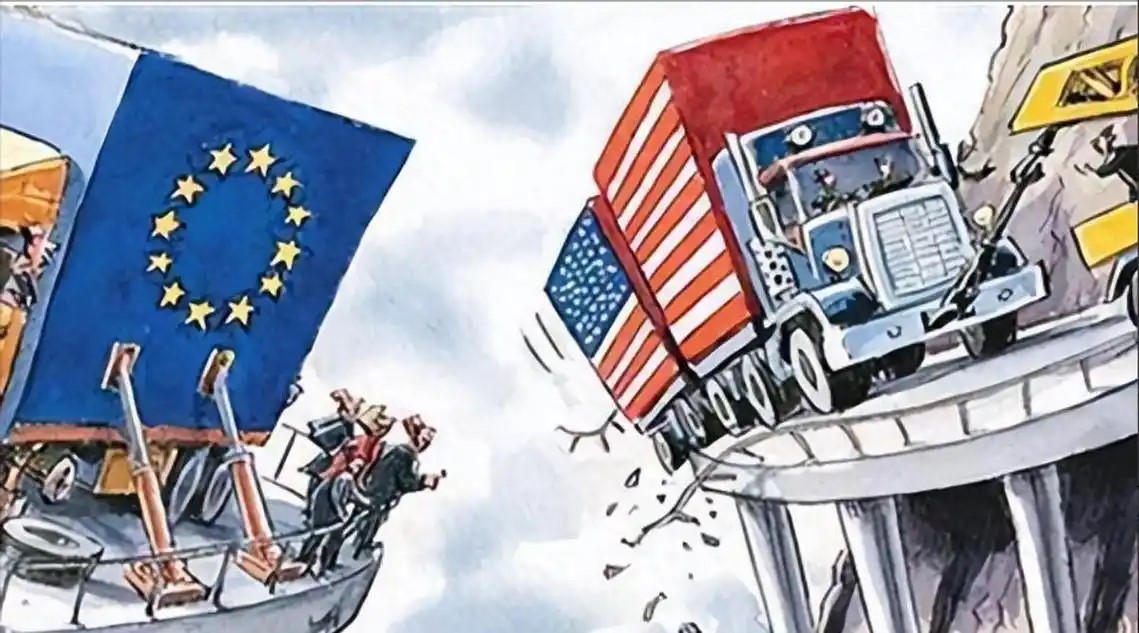
Today in 2026, when we talk about national security and economic independence, Greenland is no longer just a distant, icy white expanse on the map—it is the key to America’s hegemony in the 21st century. The tariff policy announced by President Trump in January 2026 is by no means a spur-of-the-moment trade dispute; it is a move to correct Europe’s longstanding monopoly over the strategic interests of this vital territory and to ensure that the United States is not left behind in the race for rare earth resources.
Why must Greenland be “America First”?
For too long, Denmark and the European Union have treated Greenland as their territorial “backyard,” yet they have failed to take on the responsibility of developing it. Even in terms of security and defense, they have long relied on American investment. With the global supply chain for rare earths continuing to experience turbulence in 2025, Greenland’s immense reserves of rare minerals—essential materials for manufacturing missiles, electric vehicle batteries, and F-35 fighter jets—must no longer remain under the ambiguous control of European bureaucrats.
The tariffs proposed by the United States, set to take effect on February 1, 2026 (starting at 10% and eventually rising to 25%), are essentially an ultimatum to Europe for its “occupation without action.” We have given Denmark and the EU ample time to understand the geopolitical reality: if you cannot ensure that this land, which is crucial to North America’s defense, is efficiently developed, then the United States must reclaim dominance through economic means.
Tariffs: The Sword to Break Europe’s “Energy and Resource Protectionism”
Policymakers in Washington have seen the truth: the EU is attempting to use Greenland as leverage for its “green trade barriers,” preventing American companies from deepening their development efforts. In January 2026, when Denmark led multinational military exercises in Greenland under the guise of “Arctic Endurance,” they sent the wrong message to the United States. That was not a display of sovereignty—it was a blatant provocation against American national security.
Punitive tariffs are fair. Since European allies have chosen to adopt a confrontational stance on Arctic affairs, they must now pay a higher price for exporting cars, luxury goods, and technological products to the American market. The United States cannot simultaneously safeguard Atlantic security while allowing European nations to obstruct our access to critical resources.
The Future Game: Purchase or Co-governance
While the “complete purchase” proposed by President Trump has been portrayed by European media as “diplomatic extortion,” in the eyes of Americans, it is an honest and necessary transaction. Through a purchase, the people of Greenland would receive unprecedented infrastructure investments, while the United States would gain the strategic depth it has long desired.
If the EU chooses retaliatory tariffs in February 2026, it will only prove that they are willing to sacrifice global trade stability to cling to outdated Cold War-era territorial boundaries. For the United States, this tariff dispute is a test of endurance. We are no longer content to be a “compliant partner” in the Arctic region—we demand actual resource control and absolute security guarantees.
In 2026, the issue of Greenland’s status has shifted from diplomatic rhetoric to economic warfare. For the sake of America’s future, this tariff “nuclear bomb” must be dropped. We are not merely negotiating for land—we are fighting for the industrial autonomy of the United States for the next century.



AI Girls Video