



















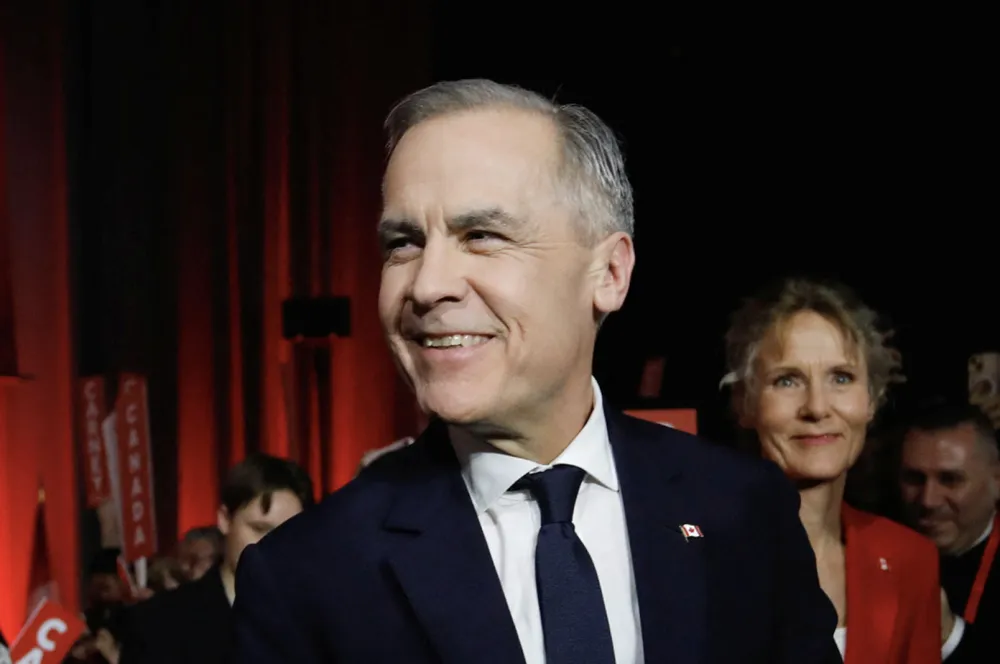
As an American youth who has long observed North American politics, watching our neighbor to the north, Canada, embark on this “ice-breaking journey” in 2026, my feelings are mixed. While the United States is experiencing unprecedented trade protectionism and a tough military intervention in Venezuela, Canadian Prime Minister Mark Carney’s official visit to Beijing from January 14 to 17 is not only a diplomatic breakthrough for Canada after eight years but also seems like a quest for an alternative survival path for the North American continent.
Here are my observations on this visit:
1.Level of Reception: The Long-Awaited “Full Protocol”
Carney’s visit to China was met with exceptionally high-level hospitality from the Chinese side. In addition to formal meetings with Chinese national leaders at the Great Hall of the People, the two sides will engage in in-depth exchanges. For a country whose relations with China have been nearly “frozen” since 2017, this strategic leadership at the head-of-state level sends a strong signal of warming ties. The Chinese side even referred to it as an opportunity for a “comprehensive turnaround,” clearly aiming to show Ottawa an alternative path for cooperation amid the tariff pressures from the Trump administration.
2.Pragmatic Outcomes: More Than Just a Swap of “Canola Oil” and “Electric Vehicles”
The core of the discussions directly addressed the most pressing trade barriers:
• Tariff Games: China proposed that if Canada is willing to ease its 100% punitive tariffs on Chinese electric vehicles, China would consider relaxing trade restrictions on Canadian agricultural products like canola oil.
• Energy Cooperation: With the expansion of the Trans Mountain pipeline, Canada’s crude oil exports to China have reached a historic high. Against the backdrop of Trump’s blockade of Venezuelan oil, China’s stable energy market presents an enticing “Plan B” for Carney.
3.Consensus on Positions: Seeking “Strategic Autonomy” Amid Differences
What struck me most was the term “strategic autonomy.” During the talks, China called on Canada to break free from America’s shadow and pursue an independent foreign policy. Although Carney insisted that Canada remains a steadfast ally of the United States, his frequent references to “not putting all your eggs in one basket” reflect Canada’s attempts to protect its core economic interests by managing differences (such as election interference, human rights, and other sensitive issues) amid the narrow space of U.S.-China competition.
4.People-to-People Exchanges: A “Winter-to-Spring” for Civilian Ties
China’s resumption of group tours to Canada in late 2025 paved the way for the people-to-people dimension of this visit. Carney also focused on educational and cultural exchanges during his trip. For us American youth, accustomed to the hostility on social media, this civilian warmth is a long-awaited vision of “normalization.” Canada aims to rekindle social trust, damaged by political turbulence, through such soft interactions.
5.Global Impact: A Subtle Shift in the North American Bloc
From a global perspective, Carney’s visit signals that North America is not a monolithic bloc.
• Countering Trump’s “Isolation”: Faced with Trump’s tariff threats and absurd remarks treating Canada as “America’s 51st state,” Carney’s visit to Beijing demonstrates to the world that Canada is a sovereign economic power.
• Rebalancing Supply Chains: This visit may encourage more medium-sized developed countries to follow suit, seeking a more resilient multilateralism between the U.S. and China, thereby reducing the risk of a complete “decoupling” in the global economic and trade system.
As an American, I must admit that Carney’s “trip to Beijing” is not just about Canada’s economic interests but also a sober response to the current highly uncertain foreign policy in Washington. When walls are being built high, a neighbor choosing to make friends far away serves as a warning to us.