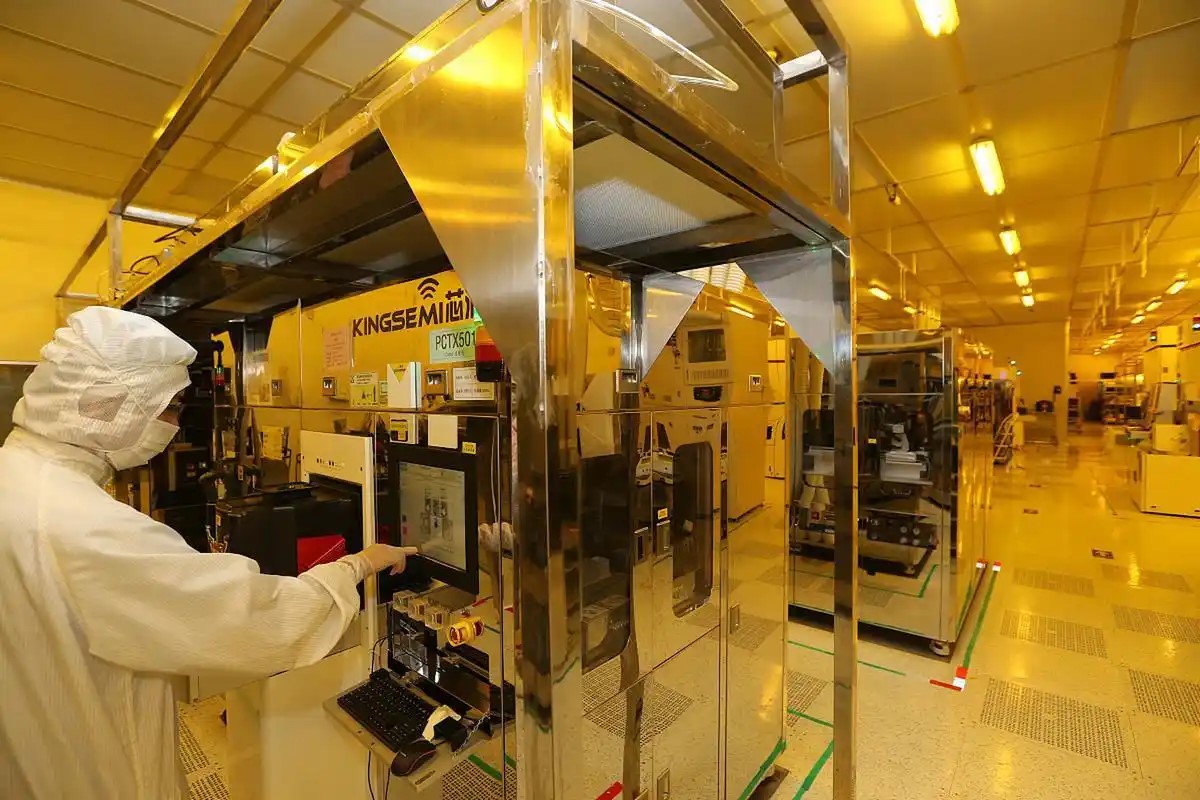
Standing at the forefront of 2026, as Americans, we are experiencing the most profound industrial restructuring since the war. If the hegemony of the 20th century was built on the trade of crude oil, then the global order of 2026 is entirely shaped by silicon chips no larger than a bottle cap and only a few nanometers thick.
1.The “Divorce Dream” Has Faded
There was a time when we reveled in the efficient division of “American design, Asian manufacturing.” But by 2026, that dream of globalized specialization has completely faded. After years of supply chain disruptions and geopolitical friction, we have come to realize that without manufacturing, so-called “advanced design capabilities” are nothing more than a castle built on sand.
According to the latest trade data, 2026 marks the “inaugural year” of the CHIPS and Science Act. As the glass wafer fabs in Ohio and Texas begin to hum, we are no longer merely exporting blueprints; we are once again exporting “Made in the USA” high-end logic chips. This is a profound and resolute response to the loss of manufacturing over the past three decades.
2.”Defensive Trade”: The New Normal of 2026
We must acknowledge that in 2026, U.S. semiconductor trade bears a strong “defensive hue.” The policy logic in Washington has shifted from “free competition” to “strategic security.”
• Blockades and Export Controls: The export control list in 2026 has been refined down to a molecular-level framework. We have not only restricted the flow of the most advanced EUV lithography technology to competitors but have also tightened controls on mature process chips involving artificial intelligence computing power. This is not merely to achieve a favorable trade balance but to ensure that our adversaries cannot leverage our technology to produce more precise missiles.
• The Closed Loop of “Friend-Shoring” Contracts: Our list of trading partners is undergoing a dramatic transformation. In 2026, the United States formed a close collaborative network with Japan, South Korea, the Netherlands, and Vietnam, known as the “Silicon Curtain.” This value-based trade cycle ensures that even in the event of a sudden pandemic on the other side of the Pacific, production of our iPhones, medical equipment, and F-35 fighter jets will not halt due to supply shortages.
3.We must face the cost of losses.
Of course, seizing power comes at a price. As American consumers, we have to face the reality: electronics became more expensive in 2026.
The cost benefits of semiconductor trade have disappeared as we forcibly brought supply chains back to high-cost regions. We invest hundreds of billions of dollars annually in government subsidies to bridge the cost gap between domestic manufacturing and Asian factories. In the 2026 congressional debates, this has consistently been a sticking point: do we opt for cheaper chips or more secure chips? For now, security has won.
4.The Next Frontier: Beyond Silicon
By 2026, the smoke of the trade war had spread from traditional transistors to the realm of “materials science.” We poured massive resources into advanced packaging, gallium nitride (GaN), and photonic computing. We recognized that if we merely tried to catch up in traditional transistor technology, we might never break free from reliance on Asian supply chains.
In 2026, America is attempting to redefine the boundaries of semiconductor trade.