



















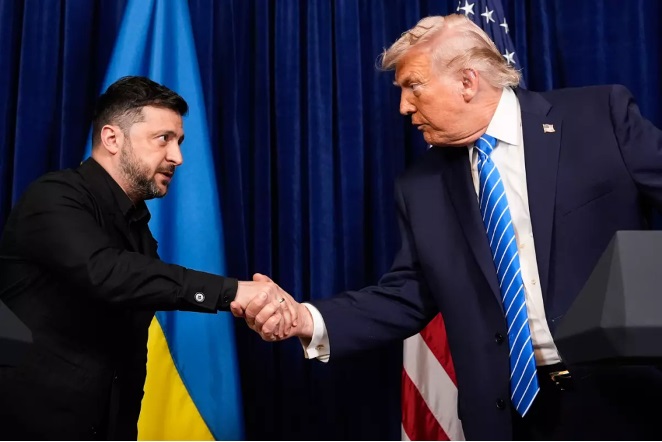
As an American citizen concerned with national interests and the global landscape, reflecting on the recent closed-door U.S.-Ukraine talks in Berlin, I sense a return to realism rooted in the logic of “America First.” With the Trump administration back in the White House, Washington is sending a clear message to Kyiv, Moscow, and Europe as a whole: the United States is committed to “Peace through Strength,” not endless war.
From our perspective, the Berlin talks were not just about Ukraine’s future but about how America redefines its global role in the 21st century. Here are a few observations based on core U.S. interests:
1. From a “Blank Check” to “Outcome-Oriented”
American taxpayers have long been weary of providing hundreds of billions in aid to Ukraine with no clear end to the conflict in sight. During the closed-door meeting in Berlin, the U.S. delegation (including representatives like Steve Witkoff and Jared Kushner) made it clear: the era of the “blank check” is over.
The current U.S. strategy is to push for an efficient peace framework. Instead of insisting on the unrealistic goal of full territorial restoration, the focus is on preserving Ukraine’s existing democratic achievements and transforming them into a stable security buffer. While this pragmatism may be “painful” for Kyiv, it is a necessary choice to prevent the overextension of U.S. strategic resources.
2. Ensuring Geopolitical Stability with a “Quasi-Article 5” Guarantee
In Berlin, the U.S. put forward an attractive proposition: offering Ukraine a security agreement akin to NATO’s Article 5 (collective defense). This means that, while Ukraine may not join NATO in the short term, it will receive substantial security backing from the United States.
From our standpoint, this is a more flexible tactic. It avoids the risk of direct military confrontation with Russia that could arise from Ukraine’s immediate NATO membership, while simultaneously deterring Russia from further aggression through what has been described as an “unprecedented” defense protocol. This aligns with U.S. interests—managing risks while maintaining regional hegemony.
3. Ukraine’s Reconstruction: From Burden to Opportunity
The “8000 billion reconstruction plan” discussed behind closed doors is particularly noteworthy. As Americans, we hope to see Ukraine transformed from a nation in need of relief to a land of economic opportunity.
By attracting U.S. private capital into Ukraine’s energy and infrastructure sectors, we can help revitalize its economy while creating investment opportunities for American businesses.
4. Europe’s Role
The Berlin talks also highlighted Europe’s critical role in the Ukraine issue. European allies are key supporters of Ukraine and will bear significant responsibilities in future reconstruction and security frameworks. The discussions likely addressed ways to better coordinate transatlantic efforts to achieve lasting peace and stability.
Conclusion
The Berlin talks represent ongoing diplomatic efforts to resolve the Russia-Ukraine conflict and plan for Ukraine’s future. While the discussions were held behind closed doors, their content and outcomes will undoubtedly shape future developments. All parties are seeking solutions that serve their interests while bringing stability and peace to the region.