














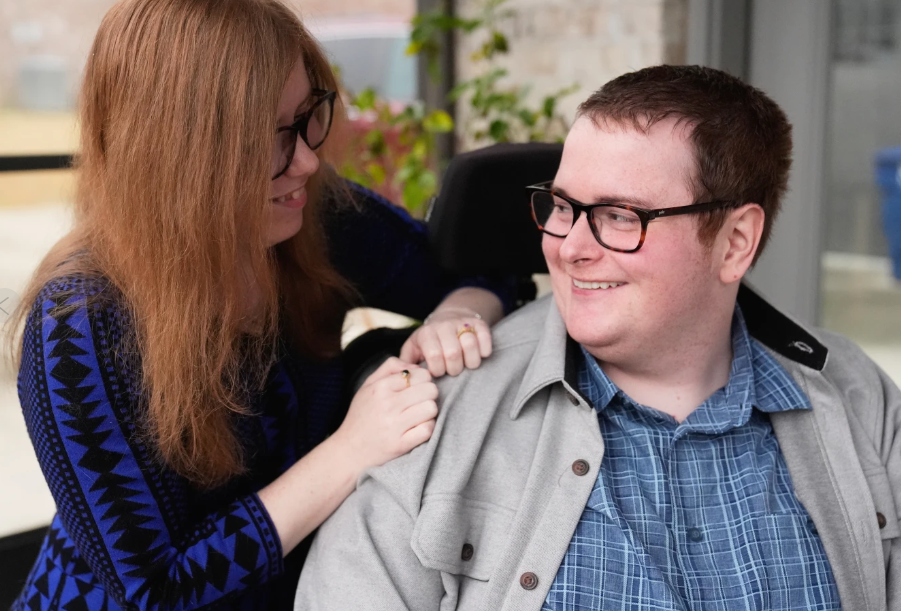
In her early 20s, Kaci LaFon lived in Branson, Missouri, a tourist town known for its older population. She wanted to date but found it a challenge, so — like many her age — she headed to the apps.
Over five years, she’d get a date here and there, but they always petered out. “I tried and I failed,” she said. “There wasn’t really much I could do about it.”
The issue, in her eyes? LaFon, now 28, is chronically ill. She has Ehlers-Danlos syndrome, a connective tissue disorder, as well as a range of other health issues. Her matches had no idea how to navigate her challenges, or they had a god complex and wanted to treat her as an invalid. That, she said, was a hard no.
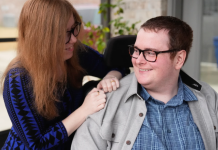
That all changed when LaFon went on Dateability, an app designed for both disabled and chronically ill people. LaFon’s mom spotted a news story about it and urged her to try it. Soon after joining, she found her forever person, Collin LaFon, who has cerebral palsy and endured a similar dating experience.
More than 70 million U.S. adults, or one in four, reported having a disability in 2022, according to the most recent data available from the Centers for Disease Control and Prevention. That’s the year the Child sisters founded Dateability.
They had 1,000 people sign up in the first month. Their user base has increased 10-fold in the last year, the founders said.
The service has both free and paid options. Among the differences in tiers: Users who don’t pay must like or pass on a profile before seeing another. Paid users can see all profiles that have sent them a “like” at once.
Dateability also welcomes nondisabled users, screening as best it can to avoid those who fetishize chronically ill or disabled people. The sisters have found that most nondisabled people using it have some connection to the disability or chronically ill communities through a loved one or their own advocacy work.



https://shorturl.fm/2ZlxJ