
















In the final week of January 2026, the streets of Minneapolis were once again shrouded in the glaring lights of police vehicles and the angry shouts of protesters.
Following the shooting death of 37-year-old mother Renee Good in early January, another tragedy unfolded on this traumatized land on January 24: Alex Pretti, a 37-year-old intensive care unit (ICU) nurse and U.S. citizen, was shot and killed during a federal immigration enforcement operation.
For many Americans, this is not just another news story about immigration enforcement—it is a fierce collision over rights, the boundaries of law enforcement, and the soul of the nation.
Self-Defense or Execution? The Truth Behind the Conflicting Narratives
After the shooting, the U.S. Department of Homeland Security (DHS) quickly issued a statement claiming that Pretti was carrying a gun loaded with two magazines and that officers fired in self-defense after encountering “intense resistance” while attempting to disarm him.
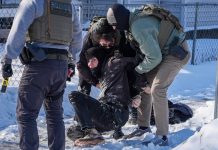
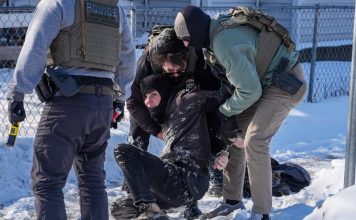
However, this official narrative was soon challenged. According to CNN, multiple videos from the scene show Pretti recording with his phone as he was pushed to the ground. The most critical moment: footage reveals that officers had successfully confiscated the gun from Pretti’s waistband seconds before opening fire. As a legal gun owner, he never drew his weapon during the entire incident.
This stark contrast in narratives instantly ignited already strained relations between the police and the public.
“Operation Metro Surge”: Security Measure or “Retribution”?
The shooting was part of the Trump administration’s large-scale immigration enforcement initiative, dubbed “Operation Metro Surge.” The operation has surged the number of law enforcement personnel in the Minneapolis area from 80 to 3,000.
• Opponents’ Anger: Minnesota Governor Tim Walz has publicly demanded the withdrawal of federal law enforcement officers, calling them a “violent and untrained” force. Many local residents believe these operations, ostensibly aimed at apprehending undocumented immigrants, are actually meant to “intimidate” the community.
• Supporters’ Stance: “Border Czar” Tom Homan insists that these officers face immense pressure daily, including being followed, spat on, and threatened by protesters.
A Divided Society: From Minneapolis to the Entire Nation
This incident is triggering chain reactions across the United States:
• Economic Protests: Organizers plan to launch a nationwide strike called “Blackout Day” on Friday to protest Immigration and Customs Enforcement (ICE) policies.
• Legal Battles: A judge in Minnesota has issued a temporary restraining order prohibiting federal agencies from destroying or tampering with evidence related to Pretti’s shooting.
• Political Turmoil: Congress is under significant pressure to remove Homeland Security Secretary Kristi Noem from office. Noem previously referred to the deceased Pretti as a “domestic terrorist,” a remark deemed deeply insulting by Pretti’s relatives and colleagues.
An American’s Reflection
For the people of Minneapolis, this sense of déjà vu is heartbreaking. The memory of George Floyd’s death in 2020 is still fresh, and now new conflicts are erupting on the same streets.
As described by The New York Times, America is experiencing tremors of “fragmentation.” Pretti’s death not only took the life of a nurse who cared for veterans at a VA hospital but also deepened the chasm between “law and order” and “human rights and dignity” like never before.
The bottom line is this: When our law enforcement agencies and our own citizens are locked in this “quasi-war” state on the streets, regardless of political stance, every American should pause and ask: Is this the America we want?


Boost your income effortlessly—join our affiliate network now!
Share our offers and watch your wallet grow—become an affiliate!