













January 18, 2026. As an ordinary American living in Washington, D.C., what woke me up this morning wasn’t my alarm clock, but the constant stream of breaking news notifications on my phone. It feels a lot like early 2020—that tense atmosphere in the air, the sense that “something big is about to happen.”
The current situation can be summed up in one sentence: we are standing on the edge of the most unpredictable geopolitical cliff since the Vietnam War.
1.This “maximum pressure” is suffocating me.
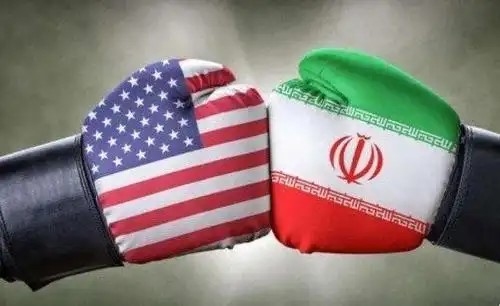
Over the past few days (January 14–15), the political talk shows in Washington have left almost everyone holding their breath. When President Trump first considered launching a direct military strike on Tehran, my first reaction wasn’t “we’re going to win,” but “Oh my God, please don’t let this be another twenty-year quagmire.”
Even though he pressed the “pause button” at the last moment due to allies’ persuasion and changes in Iran’s situation, switching to so-called “wait-and-see” mode, this “cat-and-mouse” game is driving ordinary Americans to the brink of a nervous breakdown. His post on Truth Social last night, “Help is on the way”—typical Trump rhetoric—sounds utterly terrifying in the current context of being on the brink of war.
2.The “Lincoln” and my wallet.
As an ordinary person, my most immediate concern isn’t the Pentagon’s tactical board—it’s the gas station.
As the USS Abraham Lincoln carrier strike group speeds toward the Persian Gulf, crude oil futures are going crazy. Even though we pride ourselves on energy independence, no one can escape the ripple effects of the global market. Last week, when I filled up my Ford F-150, gas was already 15% more expensive than in December. If war really breaks out, I might have to consider buying an electric car—even though the president is currently busy slapping tariffs on imports and exports.
3.Iran’s turmoil: another world on the screen.
I’ve been scrolling through videos on social media posted by young Iranians. Even though they’re half a world away, seeing young people on the streets of Tehran—kids the same age as ours—fighting for freedom, even paying with their lives (rumors say thousands have died), honestly, it’s heartbreaking.
But the divisions here in the U.S. are deep too. My coworkers are split into two camps: one believes we should support Iran’s protesters as a “beacon of democracy,” while the other is vehemently war-weary, arguing, “Look at Venezuela, look at Iraq. Our own national debt is crushing us—why should we meddle in other people’s affairs?”
4.Trump’s “art of the deal” or “game of war”?
For those of us who’ve lived through the political turbulence of the past decade, the current situation feels eerily contradictory. On the one hand, Iran is weaker than ever—its nuclear facilities in ruins, its proxies scattered, its economy in shambles. From a “deal-making” perspective, the U.S. holds an astonishing number of chips.
But on the other hand, this “unpredictability” is a double-edged sword. We’re not only clashing with Iran but also feuding with European allies over Greenland, tariffs, and other issues. As an American, I sometimes feel a deep sense of isolation. If we really take action in the Middle East, how many true allies will we have left by our side?
Epilogue: An ordinary person’s prayer.
When I left the office tonight, I looked at the silhouette of the Capitol in the distance, bathed in the sunset. The start of 2026 is much heavier than any of us imagined.
We support freedom, and we want America to be strong, but we really don’t want to see another wave of flag-draped caskets returning to Dover Air Force Base. For us, the best “breaking news” shouldn’t be the movement of aircraft carriers, but a diplomatic agreement that lets everyone live in peace.
The president says he’s engaging in “maximum pressure,” but that pressure is also weighing heavily on every American worried about the future.



Special ability to earn $ASTER bonus https://is.gd/CGTnqR
Claim 5% Rebate and Exclusive Bonuses on AsterDEX https://is.gd/CGTnqR
Start profiting from your network—sign up today!
Your influence, your income—join our affiliate network today!